
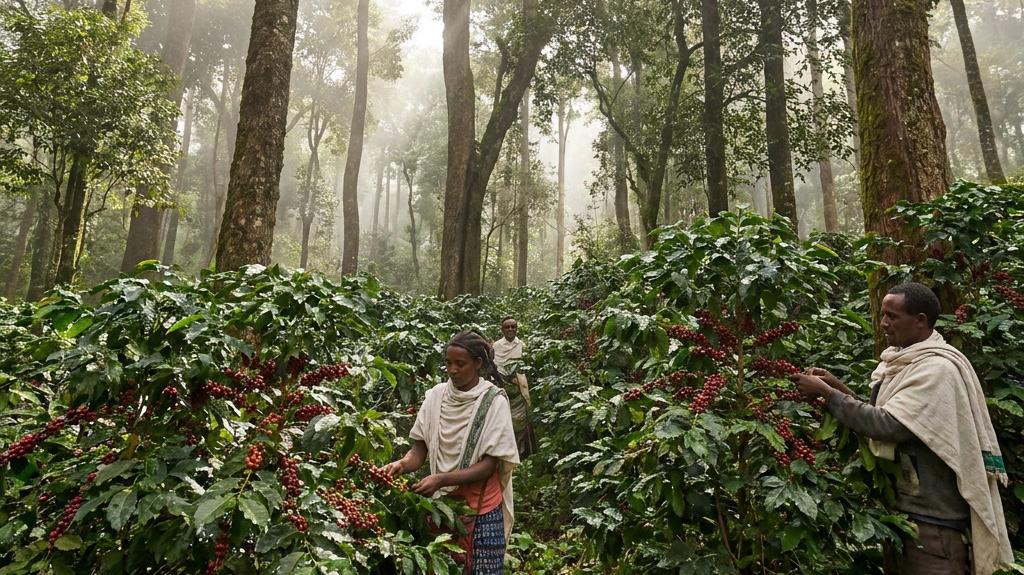
At KIBCO Coffee, Ethiopian coffee is not just something we sell. It is part of who we are.
Ethiopia is widely known as the birthplace of Arabica coffee - the coffee loved around the world for its aroma, sweetness, complexity and character. Long before coffee became a global drink, it was growing in Ethiopia’s highland forests and becoming part of everyday life, hospitality and community.
For us, Ethiopian coffee is more than a product. It is heritage, flavour, culture and connection in every cup.
Origins
Where the coffee story begins
Coffee has travelled across the world, but its story begins in Ethiopia.
From Ethiopia’s forests and highlands, Arabica coffee developed naturally before spreading to Yemen and then to the wider world. Today, coffee is grown in many countries, but Ethiopia remains special because it is where Arabica coffee has its deepest roots.
This is one reason Ethiopian coffee tastes so distinctive. It is not one simple flavour. It is a wide world of flavours, shaped by region, altitude, soil, climate, processing method and generations of farming knowledge.
When you drink Ethiopian coffee, you are tasting one of the oldest and richest coffee traditions in the world.
Taste
A country of many coffee flavours
Ethiopian coffee is famous for its bright, aromatic and complex flavour.
Some Ethiopian coffees are floral and tea-like. Some are fruity and sweet. Some have notes of citrus, berries, honey, chocolate, spice or wine-like acidity. This variety is one of the reasons coffee lovers around the world respect Ethiopian coffee so highly.
The flavour depends on where the coffee is grown and how it is processed.
A coffee from Yirgacheffe may be elegant, floral and citrusy.
A coffee from Sidamo may be bright, fruity and smooth.
A coffee from Limu may be balanced, sweet and rounded.
A coffee from Djimmah may be deeper, earthier and more traditional.
A coffee from Guji may offer stone fruit, honey and floral notes.
A coffee from Harar may be bold, rich and naturally sweet.
Each origin has its own personality. That is why Ethiopian coffee is exciting: it gives customers the chance to explore many different flavours from one country with an extraordinary coffee heritage.
Altitude
Grown in the highlands
Many Ethiopian coffees are grown in highland areas where the climate is well suited to Arabica coffee.
The cooler mountain conditions allow coffee cherries to ripen slowly. This slower development can support sweetness, aroma and complexity in the cup. Combined with Ethiopia’s natural coffee diversity, this creates coffees that are often lively, expressive and memorable.
This is why Ethiopian coffee is loved by both everyday coffee drinkers and speciality coffee professionals. It can be enjoyed as espresso, filter coffee, cafetière, moka pot, cold brew, or through the traditional Ethiopian jebena method.
Process
Washed and natural coffees
Ethiopian coffee can be processed in different ways, and this has a big impact on taste.
Washed Ethiopian coffees are often clean, bright and delicate. They can highlight floral, citrus and tea-like notes.
Natural Ethiopian coffees are dried with the fruit still around the bean. These coffees can taste more fruity, full-bodied and sweet, often with berry, wine-like or tropical fruit notes.
Both styles can be beautiful. The best choice depends on the flavour you enjoy.
At KIBCO, we want to help customers understand these differences so they can choose the coffee that suits them best.
Hospitality
Coffee as culture, not just caffeine
In Ethiopia, coffee is not only a drink. It is a tradition of welcome.
The Ethiopian coffee ceremony is one of the most meaningful expressions of hospitality. Green coffee beans are roasted, ground and brewed in a traditional clay pot called a jebena. The process is slow, aromatic and social. It brings people together.
This is the spirit we want to carry at KIBCO Coffee.
In a busy city like London, coffee is often something people drink quickly on the way to work. But Ethiopian coffee reminds us that coffee can also be a moment to pause, talk, share and connect.
That is why KIBCO is more than a coffee shop. It is a place where Ethiopian coffee culture meets London life.
Our choice
Why KIBCO chooses Ethiopian coffee
We choose Ethiopian coffee because it represents everything we believe good coffee should be:
- Full of character
- Rich in heritage
- Naturally diverse
- Beautiful in aroma
- Honest in origin
- Connected to people and place
Our aim is to bring high-quality Ethiopian coffee to customers in London and across the UK, whether they visit our café, buy coffee beans online, or enquire about wholesale supply.
We want every customer to understand not only what they are drinking, but where it comes from and why it matters.
Taste guide
How to choose your Ethiopian coffee
If you are new to Ethiopian coffee, here is a simple guide.
- Yirgacheffe
- Choose Yirgacheffe if you enjoy floral, citrus and elegant coffee.
- Sidamo
- Choose Sidamo if you like bright, smooth and fruity coffee.
- Limu
- Choose Limu if you prefer a balanced cup with gentle sweetness.
- Djimmah
- Choose Djimmah if you enjoy bold, earthy and traditional flavours.
- Guji
- Choose Guji if you like honey, stone fruit and floral notes.
- Harar
- Choose Harar if you want a deep, rich and naturally sweet coffee.
Every coffee has its own character, and part of the joy is discovering which one feels right for you.
Origin to cup
From Ethiopia to London
At KIBCO Coffee, we are proud to celebrate Ethiopian coffee from origin to cup.
Our coffee is selected by origin, roasted with care, and prepared with respect for the people, land and culture behind it. Whether you drink it at our café on Caledonian Road or brew it at home, our goal is simple: to share the beauty of Ethiopian coffee with every customer.
Ethiopian coffee is special because it carries history, flavour and culture together.
That is why KIBCO chooses Ethiopian coffee.
That is why KIBCO exists.
Visit KIBCO Coffee
Experience Ethiopian coffee in London
Visit KIBCO Coffee on Caledonian Road, London, to enjoy freshly roasted Ethiopian coffee, espresso drinks, smoothies, pastries and the traditional jebena coffee experience.
You can also explore our Ethiopian coffee origins online and choose the coffee that suits your taste.